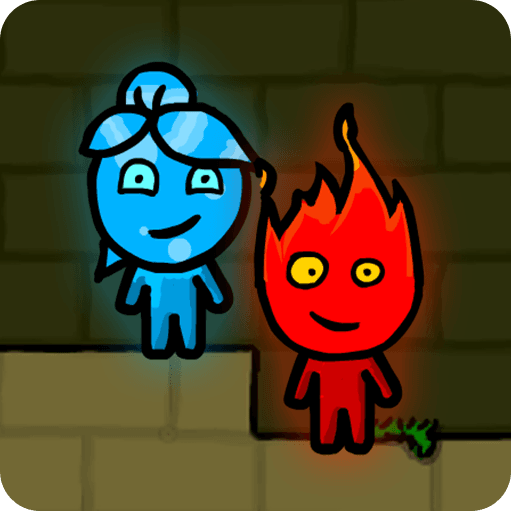
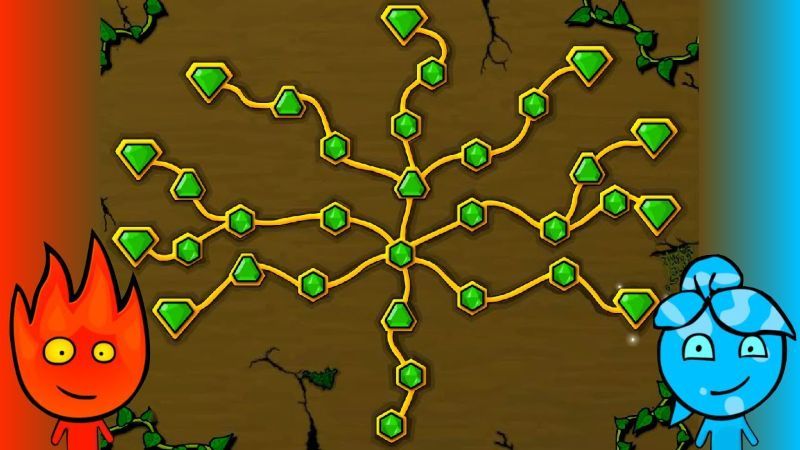
Fireboy and Watergirl 1: Forest Temple is a co-op puzzle platformer where Fireboy is safe in fire, Watergirl is safe in water, and both must avoid green goo while working together to activate mechanisms and reach their exits.
Fireboy and Watergirl 1: Forest Temple is popular because it combines simple mechanics with progressively harder puzzles that require teamwork and precise timing.
The game’s quick restarts, satisfying learning loop, and emphasis on strategy and coordination keep players engaged across its 32 levels.
Take a quick break with Ping Pong Go to reset your timing, then return to Fireboy and Watergirl 1: Forest Temple with better focus and smoother control.
Read the full guide below to master Fireboy and Watergirl 1: Forest Temple and tackle every level with better strategy and timing.
Fireboy and Watergirl 1: Forest Temple is a classic two-character puzzle platformer where progress depends on timing, communication, and understanding elemental rules. You can play it as true co-op on one keyboard or challenge yourself solo by controlling both characters.
Either way, the goal stays the same: collect gems, trigger switches, avoid traps, and guide both heroes to their matching exit doors across 32 levels.
This game succeeds because it is simple to understand but difficult to master. The levels start friendly, then gradually introduce pressure plates, levers, elevators, timing gates, and split paths that force teamwork.
The puzzles rarely require complex logic, but they do require reliable execution and coordination; especially when one player must hold a switch while the other moves through a temporary opening.
Another reason it remains a favorite is pacing. Levels are short, restarts are quick, and the learning loop is satisfying: every mistake teaches you something practical about positioning, timing, or sequencing.
Most failures happen when players forget the elemental limits. Treat these as non-negotiable laws:
If you follow these rules consistently, you will waste fewer lives and solve levels faster because you will stop attempting impossible routes.
Typical desktop controls are straightforward: Fireboy uses the arrow keys, Watergirl uses A and D to move and W to jump. On mobile or touch-friendly versions, you will see on-screen controls.
Before you move, do a five-second scan. This is the fastest habit you can build:
Once you know what is locked and how it opens, the route becomes much clearer. Many players fail repeatedly because they start running immediately instead of mapping the level’s “mechanism chain.”
If you are playing with a friend, communication beats speed. The best teams keep instructions short and predictable:
When you fail near the end, repeat the last successful sequence instead of improvising.
Co-op becomes dramatically easier when each player accepts that sometimes their job is to stand still. Holding a plate safely for ten seconds is often the correct “move.”
Playing solo is less about reflexes and more about sequencing. The simplest method is “park and play”:
For longer levels, separate your run into phases: open gates first, collect gems second, exit last. If you try to do everything at once, you will create unnecessary timing conflicts.
Once you recognize the patterns, levels feel less random and more solvable:
When you feel stuck, stop and ask one question: “What is the level trying to make both characters do at the same time?” The answer is usually the solution.
Browser play is popular because it is instant and lightweight. For smoother control, use full screen if available and close extra tabs so your inputs feel responsive. If two players share one keyboard, sit comfortably and keep hands separated, many co-op deaths happen because players bump each other or miss a jump key during a timed section.
Progress saving can vary by site and browser. If you want consistent sessions, use the same device and browser whenever possible.
When you repeat the same level too many times, frustration makes your timing worse. A quick reset can help, this is where Ping Pong Go fits naturally. It is a short, reaction-based game that shifts your focus from puzzle sequencing to clean timing and control.
If you feel stuck, play Ping Pong Go for a few minutes, aim for steady rallies instead of wild shots, then return to Fireboy and Watergirl 1: Forest Temple with calmer hands and better rhythm. That small reset often turns “impossible” timing sections into easy clears.
There are 32 levels, and they gradually add new mechanics and tighter timing.
Yes. You can control both characters yourself, and it becomes a sequencing puzzle rather than a pure co-op challenge.
Green goo is a hazard that defeats both characters immediately, so neither Fireboy nor Watergirl can touch it.
Yes. It is one of the most recognizable one-keyboard co-op puzzle platformers because teamwork is built into nearly every level.
Scan each level first, communicate roles in co-op, and in solo play move one character at a time while parking the other safely.
Fireboy and Watergirl 1: Forest Temple remains a standout because it rewards clean teamwork, careful sequencing, and small improvements that compound across the full 32-level run. Memorize the elemental rules, scan the room before you move, and treat coordination as the real “power-up.”
When you hit a wall, take a quick Ping Pong Go reset, then come back and clear the level with better timing and patience.